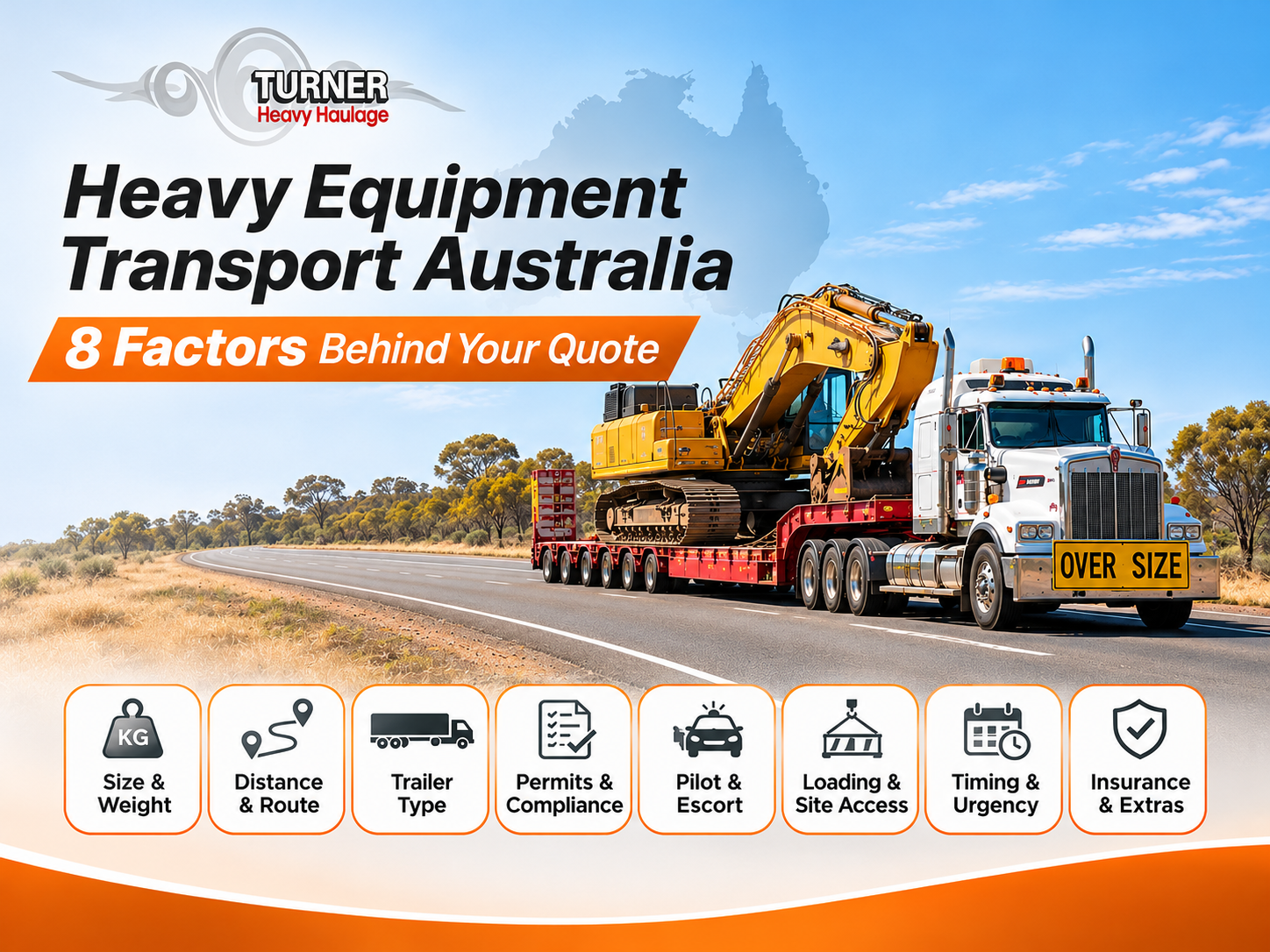
Heavy Equipment Transport Australia: 8 Factors Behind Your Quote
Moving heavy machinery in Australia is not just about arranging a truck and choosing a delivery date. Whether you need to relocate a bulldozer, excavator, crane, grader or mining equipment, the cost depends on various operational and logistical factors.
Businesses planning heavy equipment transport Australia want to know one thing: how much it will cost. Well, there is no universal price chart for it. There are various factors that influence the cost, and understanding those will help you budget accurately and avoid unexpected expenses.
Factors That Affect The Quote For Heavy Equipment Transport Costs
At Turner Heavy Haulage, we understand that every machinery relocation has different requirements. Here are eight important factors that determine the cost of heavy equipment transport across Australia.
1. Size & Weight Of The Machine
Weight and dimensions are a major factor in deciding the cost of the move. A compact loader fits a standard trailer; however, a large bulldozer or an excavator requires a low loader with more axles and a more powerful prime mover.
Transport providers consider overall height, weight, length, total operating and transport weight, removable components and attachments, weight distribution and axle loads and whether the machinery exceeds standard road transport limits.
Once a load exceeds legal width, height, length or mass limits, it becomes oversize or overmass, and the job moves into a different cost bracket with extra rules.
2. Distance & Route
Distance affects fuel, truck availability, and driver time. However, it is never a simple per-kilometre calculation. Short metro runs generally cost more per kilometre because of congestion and short trips, whereas long trips cost less per kilometre.
Routes matter as well. Narrow roads, low bridges, weight-limited structures and unsealed or remote roads can demand detours that add time and cost. Moving to remote locations like Tasmania also involves ferry or barge charges.
3. Trailer Type & Truck Requirements
Not every trailer is suitable for every machine. Choosing the right kind of transport is important for safe loading, regulatory compliance and secure transportation. Some of the common trailer options include:
- Low loader trailers: Suitable for heavy equipment and machinery needing a lower transport height.
- Drop deck trailers: Ideal for machinery that requires greater height.
- Extendable trailers: Designed for longer equipment and oversized loads.
- Multi-axle trailers: Used for distributing heavier loads across additional axles.
At Turners Heavy Haulage, we recommend the most appropriate setup depending on your machinery specifications and delivery requirements.
4. Permits & Regulatory Requirements
In Australia, heavy vehicle access and oversize transport requirements are regulated through the National Heavy Vehicle Regulator (NHVR) and relevant state and territory road authorities.
Oversized and over-mass machinery cannot always travel under standard road transport conditions. Depending on its dimensions, weight and route, the movement may require specific permits and road authority approvals. Additional costs often include:
- Oversize and over-mass permits
- Route assessments and approvals
- Bridge or infrastructure assessments
- Local road authority permissions
- Additional compliance arrangements
5. Pilot Vehicles & Escort Requirements
Some oversized machinery movements need a pilot or escort vehicle to manage the road and traffic conditions. The number of escorts required depends on the dimensions of the load, travel route and applicable regulations.
Escort-related expenses often include:
- Pilot vehicle hire
- Additional driver and crew cost
- Police escorts if required
- Extended travel hours
For particularly complex or large machinery, escort arrangements may take a significant portion of the overall travel budget.
6. Loading, Unloading & Site Access
Businesses often overlook loading and unloading requirements while comparing transport quotes. Problems at pickup and delivery can lead to additional charges:
- No loading ramp or dock
- Soft, steep or muddy ground
- Overhead obstructions or tight turning areas
- Machines that are not drivable and need winching or a crane
- Long waiting times for the operator or site contact
Preparing the site beforehand can help minimise delays and additional handling costs.
7. Timing & Urgency
Same-day and short-notice jobs usually cost more, since the haulier must reshuffle trucks and drivers. Peak periods, such as the lead-up to major projects or wet-season shutdowns, can tighten availability and raise prices.
Flexible dates give you more options and often better pricing. Weather can also delay or reschedule jobs, especially in regional and northern areas.
Last-minute bookings, peak construction periods, restricted travel windows and urgent delivery requirements may increase costs.
8. Insurance, Fuel & Additional Requirements
Heavy machinery is often a high-value business asset. Protecting it during transportation is an important consideration when comparing providers. Your quote should clearly explain what insurance coverage is included and whether additional cargo insurance is recommended.
Other requirements that may influence your quote include:
- Additional load restraints or securing equipment
- Machinery preparation and attachment removal
- Special handling arrangements
- Storage before or after transportation
- Dedicated transport rather than shared-load arrangements
Hidden Costs Many Quotes Miss
Many online price guides stop at the main factors. Before you accept a quote, ask about:
- Whether waiting time is charged hourly and after how many free minutes.
- How a failed or delayed delivery is handled.
- Whether wet weather or poor ground conditions affect the price.
- Who will be responsible for permits if the route changes.
- What happens if the machine’s weight is higher than declared.
How To Get An Accurate Quote?
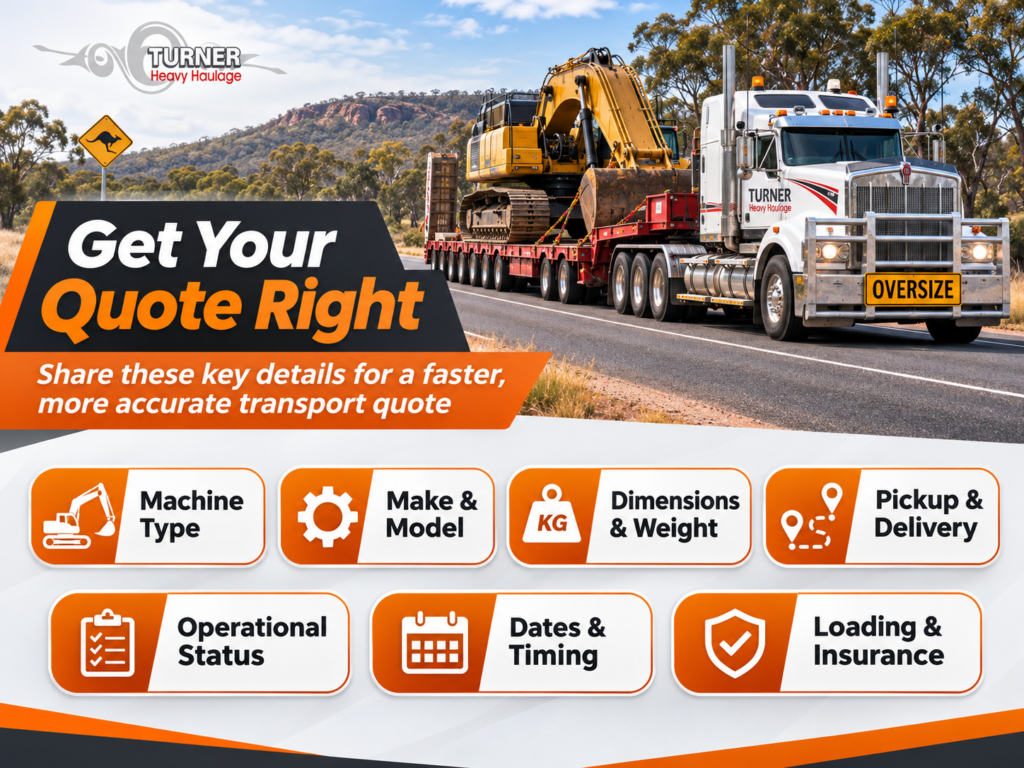
Getting an accurate quote starts with providing the right information. Before contacting a heavy haulage company, prepare the following details:
- Machinery type, make and model.
- Overall length, width, height and weight.
- Pickup and delivery locations.
- Whether the machinery is operational.
- Required collection and delivery dates.
- Any special loading or unloading requirements.
- Additional insurance or handling requirements.
The more accurate your information, the easier it is for a transport provider to assess equipment needs, permits, routes and associated costs.
How Can You Reduce The Transportation Cost?
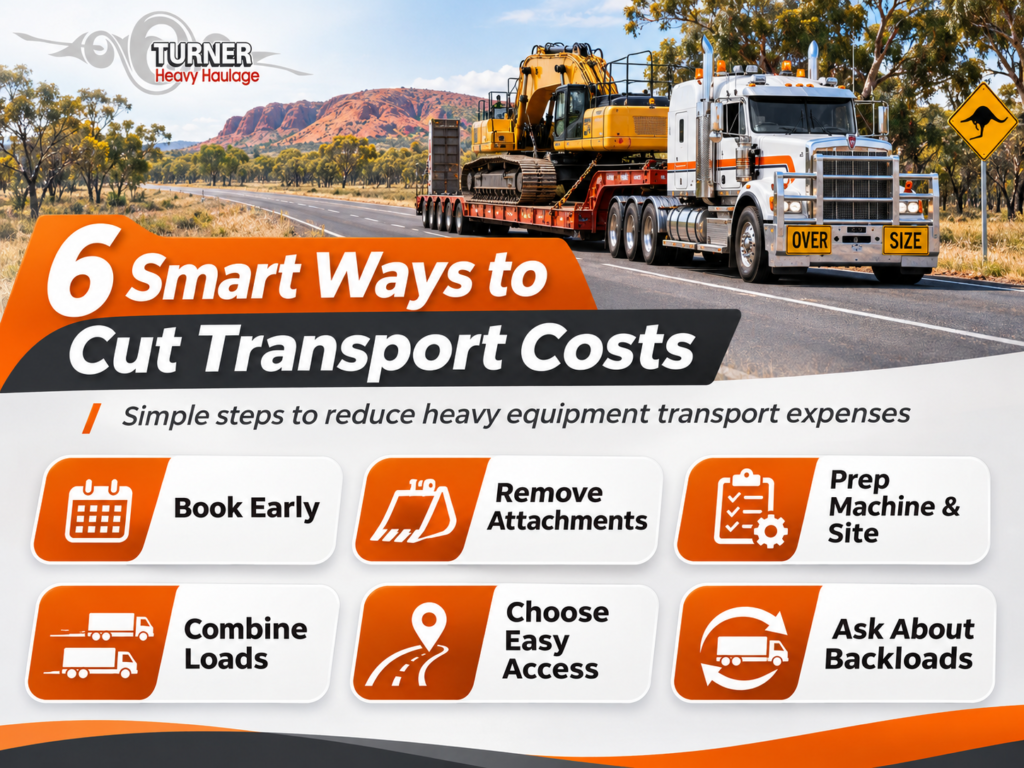
Here are a few things that will help reduce the transportation cost.
- Book early and stay flexible on dates.
- Remove attachments if that lowers height or weight.
- Prepare the machine and site before the truck arrives.
- Combine multiple machines into one trip where possible.
- Choose a pickup and delivery point with easy truck access.
- Ask your haulier about backloading opportunities.
Get A Reliable Heavy Equipment Transport
The cost of heavy equipment transport in Australia depends on a lot of factors. Choosing an experienced transport provider helps ensure your equipment is moved safely, efficiently and in accordance with applicable transport regulations.
At Turner Heavy Haulage, we provide specialised heavy equipment transport and heavy haulage solutions across Australia. Contact us to discuss your machinery relocation and request a tailored quote.
Frequently Asked Questions
- Do I need a permit to move heavy equipment?
If the load is over the legal width, height, length or mass limits, you generally need one. Your haulier should advise and handle the application. - Why do quotes for the same machine differ?
Providers may use different trailers, include different extras or price in return-load risk differently. Always compare what each quote covers. - How far in advance should I book?
As early as you can. Oversize jobs, interstate moves and busy periods need more lead time.
Share This Post
Comments
REQUEST FOR QUOTE
To get a free quote for the heavy haulage transport in New South Wales, fill up the form. We are happy to contact you soon.