How to Prepare Machinery for Transport: A Pre-Haul Checklist
Taking a heavy machine from one place to another takes a lot more than just arranging a truck and picking out a delivery date. Whether you are relocating a bulldozer or an excavator, loader or mining equipment, you need proper preparation for a safe and efficient move.
Poor preparation can lead to unexpected travel costs, loading delays, compliance issues and equipment damage. However, a few checks before collection can make the entire process easy.
Here is your Machinery Transport In Australia Checklist
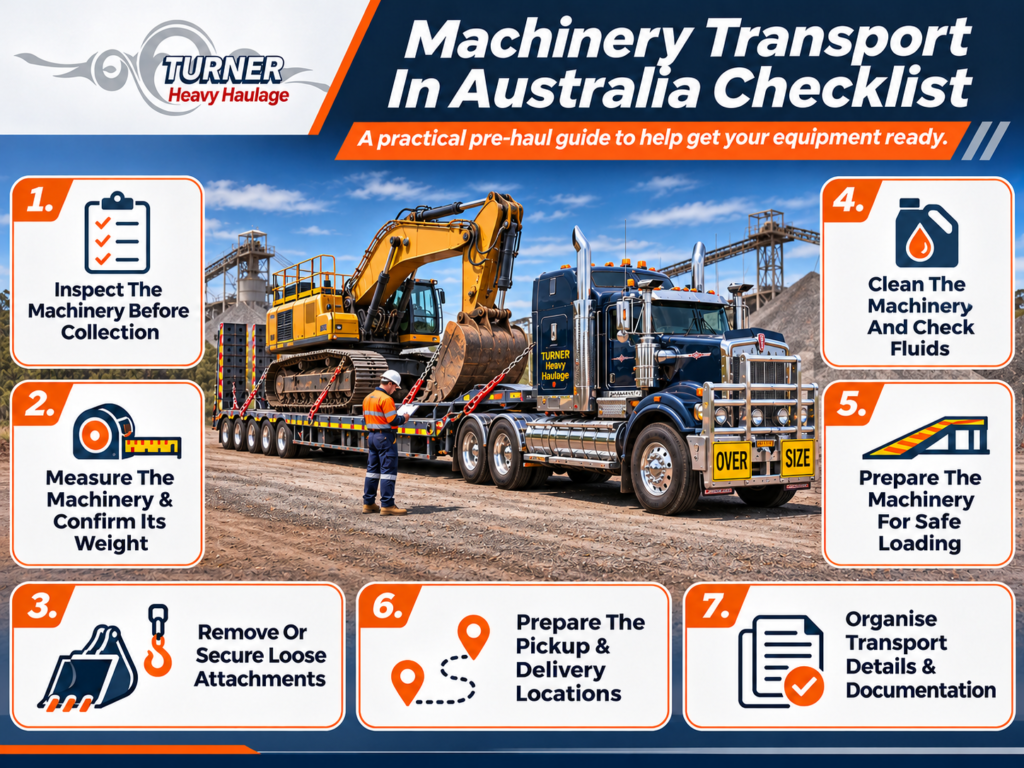
If you’re planning to book a machinery transport service in Australia, here’s a practical pre-haul checklist to help get your equipment ready.
1. Inspect The Machinery Before Collection
To begin with, check the condition of your equipment. Look for signs of visible damage, worn tyres, loose components, damaged tracks and any mechanical issues that might affect loading or transportation. Pay attention to:
- Fuel lines and hydraulic hoses for leaks.
- Tracks, tyres and undercarriage condition.
- Guards, mirrors, lights and access panels.
- Loose tools or removable attachments.
- Existing cracks, dents or damaged components.
Take photographs from different angles, including any existing damage. This creates a useful condition record before the machinery leaves the site and helps avoid confusion when it arrives. Also, inform the transport provider if the machine is not operational, has braking issues or cannot steer.
2. Measure The Machinery & Confirm Its Weight
It is important that you provide accurate measurements to the transport provider so they can bring a suitable truck and trailer and then determine whether there is a requirement for any special transport arrangement. Keep a record of the following:
- Overall length, width and height.
- Total operating or transport weight.
- Dimensions with attachments.
- Model and manufacturer details.
- Ground clearance and any protruding components.
Make sure you keep track of attachments like forks, buckets, blades and counterweights. Even a minor change in dimension can affect trailer selection, route planning and permit requirements. If possible, provide the machine’s manufacturer specifications along with recent photographs.
3. Remove Or Secure Loose Attachments
Before transport, identify components that could move, shift or become damaged during the journey. Depending on the machine and transport requirements, this may include:
- Buckets, forks and detachable attachments.
- Loose tools and accessories.
- Removable mirrors and antennas.
- Unsecured guards and panels.
- Cables, hoses and other exposed components.
Any removed attachments should be labelled, documented and prepared for separate transportation if required.
Booms, arms, blades and other moving sections should be placed in their designated transport positions and secured according to the manufacturer’s instructions.
4. Clean The Machinery And Check Fluids
When you are moving machinery from one farm to another, or construction sites, mining operations or interstate locations. Remove the excess soil, mud, vegetation, and debris from tyres, tracks, undercarriages and other accessible areas.
This reduces the risk of transferring organic material or unwanted soil between locations. Check for leaking fuel, fluids and other hydraulic oil. Ensure that you report the leaks before collection.
Do not drain fluids, disconnect batteries or modify equipment systems without confirming the requirements with your transport provider and following the manufacturer’s instructions.
5. Prepare The Machinery For Safe Loading
Loading requirements depend on the machine’s size, weight, condition and type of trailer being used. Before pickup:
- Confirm whether the machine can drive onto the trailer.
- Check whether ramps, a winch, crane or other loading assistance is required.
- Ensure suitable lifting or recovery equipment is available if needed.
- Identify approved lifting and tie-down points.
- Make sure keys and necessary operating information are available.
Your transport provider should confirm the loading method and any assistance required before the scheduled collection.
6. Prepare The Pickup & Delivery Locations
Site access is just as important as machinery preparation. Check that both locations have:
- Enough space for the transport truck and trailer to enter and manoeuvre.
- Firm, stable ground for loading and unloading.
- Clear access without unnecessary obstacles.
- Adequate overhead clearance.
- A suitable loading and unloading area.
For remote mining and construction sites, communicate any access restrictions, site entry procedures, operating hours and safety requirements in advance.
7. Organise Transport Details & Documentation
Before booking your machinery transport service in Australia, provide your transport company with all the information needed to plan the movement. This should include:
- Machinery make, model, weight and dimensions.
- Collection and delivery addresses.
- Photographs and equipment condition details.
- Attachment information.
- Whether the machinery is operational.
- Preferred collection and delivery dates.
- Site access and loading requirements.
For oversized or overweight machinery, relevant permits, route approvals and pilot or escort arrangements may also be required. Providing accurate information early helps your transport provider organise the appropriate equipment and transport arrangements.
Common Mistakes To Avoid
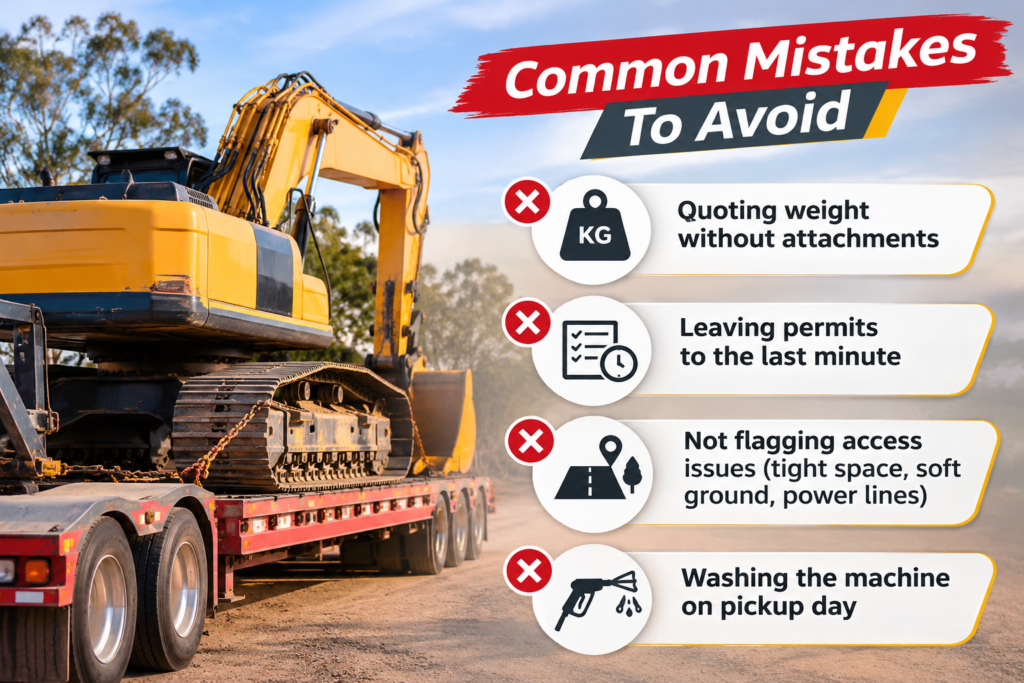
- Quoting the machine’s weight without attachments
- Leaving permits until the last minute
- Not mentioning tight access, soft ground or power lines
- Washing the machine on pickup day, when time is short
Choosing A Machinery Transport Service In Australia
Turner Heavy Haulage is a family-owned business based in Orange, NSW, with over 30 years of experience moving mining and construction machinery Australia-wide.
We handle loads up to 80 tonnes, and we look after pilot vehicles, approvals, storage and GPS tracking, so your equipment arrives safely and on time.
Ready to move your machinery? Call 0418 618 342 or request a free quote today.
Share This Post
Comments
REQUEST FOR QUOTE
To get a free quote for the heavy haulage transport in New South Wales, fill up the form. We are happy to contact you soon.