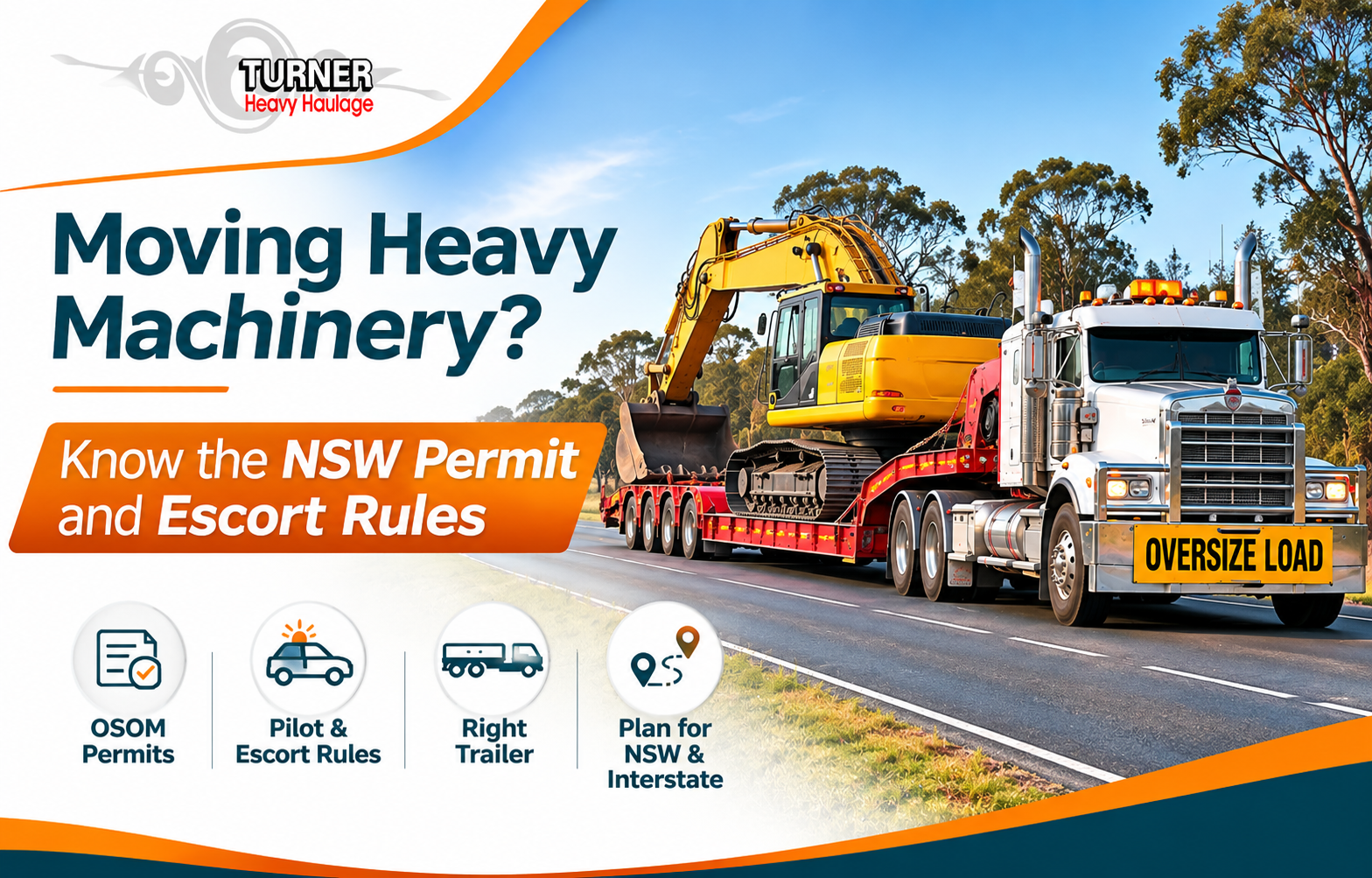
Moving Heavy Machinery? Know the NSW Permit and Escort Rules
Moving a large excavator, bulldozer or mining machine isn’t as simple as loading it onto a truck. Oversized machinery often requires approved routes, specialised trailers and additional safety arrangements before travelling on Australian roads.
For businesses arranging Heavy Equipment Transport Australia, understanding permit requirements and pilot escorts can help prevent unexpected delays, additional costs and compliance problems.
Whether you’re moving machinery across NSW or interstate, here’s what you should know before booking your next transport job.
When Is an Oversized Load Permit Required in Australia?
Transporting large excavators, mining machinery, or other heavy equipment may require an oversize or overmass (OSOM) permit if the loaded vehicle exceeds standard road limits for size or weight.
However, not every oversized load needs a separate permit. Some vehicles can travel under existing government notices, provided they follow approved routes and transport conditions. If the load doesn’t meet these conditions, a specific permit may be required.
Before arranging heavy equipment transport, always check the loaded vehicle’s dimensions, weight and road access requirements to avoid delays or compliance issues.
Understanding Machinery Transport Permits and Pilot Escorts in NSW
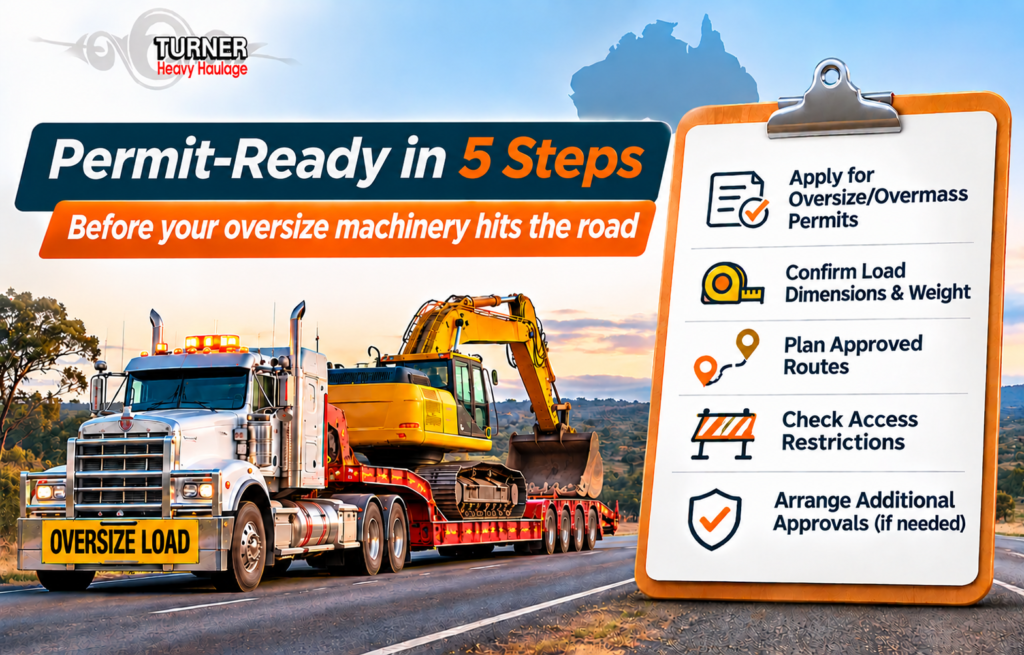
NSW has specific requirements for oversized machinery movements. These rules help protect road infrastructure while reducing risks to motorists and transport operators.
Who Issues Oversize Load Permits?
The National Heavy Vehicle Regulator (NHVR) manages applicable heavy vehicle access permit applications in NSW. Transport operators generally need to:
- Measure the machinery and loaded vehicle accurately.
- Confirm total mass, height, width and length.
- Identify suitable roads and possible restrictions.
- Check whether an existing access notice applies.
- Apply for a permit when required.
Applications can be submitted through the official NHVR oversize and overmass guidance.
Depending on the route, additional approvals may be required from road managers, rail authorities or other infrastructure operators.
When Are Pilot Vehicles Required in NSW?
Pilot vehicles help transport oversized machinery safely by warning other road users and guiding large loads through restricted areas.
In NSW, pilot requirements generally depend on the width and length of the loaded vehicle.
Loaded Vehicle Dimensions
|
Pilot Requirements
|
|---|---|
Over 3.5m wide or 26m long
|
1 pilot vehicle
|
Over 4.6m wide or 30m long
|
2 pilot vehicles
|
Over 5.5m wide or 35m long
|
3 pilot vehicles
|
6m wide or more, or 45m long or more
|
Additional escort vehicle
|
These are general thresholds for eligible daytime movements under NSW Class 1 conditions. Requirements may differ depending on the route, permit and travel time.
Importantly, an escort vehicle is not always the same as a pilot vehicle. Although pilot escorts alert drivers and assist in navigating large transport units, higher-risk movements may require an authorised traffic-control or police escort.
How to Plan Safe and Compliant Interstate Machinery Transport
Interstate transport involves more than crossing a state border. Each jurisdiction may have different route conditions, travel restrictions and escort arrangements.
For example, a machinery move from NSW into Queensland or Victoria must comply with the applicable requirements throughout the journey.
Before arranging oversized load transport across Australia, operators should consider:
- Approved routes across each state.
- Bridge capacity and overhead clearance.
- Restricted travel hours and holiday conditions.
- Pilot and escort requirements.
- Permit validity and additional approvals.
Furthermore, for oversized machinery transport in Western Australia and the Northern Territory, permits must be arranged through their respective transport authorities rather than the NHVR.
Planning ahead helps avoid costly delays, unexpected route changes and compliance issues, especially when transporting large construction or mining equipment to remote locations.
Choosing the Right Trailer for Safe Heavy Machinery Transport
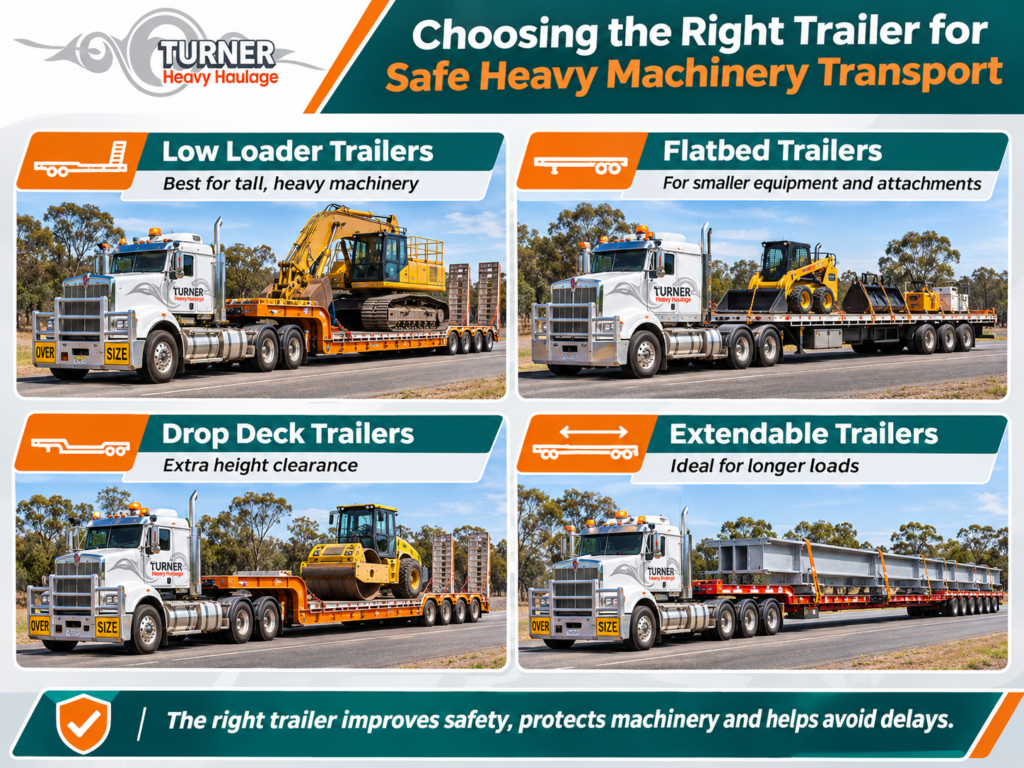
Not all heavy machinery can be transported on a standard trailer. The size, weight and height of your equipment determine which transport method is suitable.
Different types of machinery require different trailers for safe and efficient transport. Choosing the right one depends on the equipment’s weight, dimensions, ground clearance and loading requirements.
For heavy machinery transport across Australia, these are some commonly used trailer options:
- Low Loader Trailers: Ideal for large excavators, bulldozers, graders and other tall machinery. Their low deck height helps accommodate oversized equipment and manage overall transport height.
- Flatbed Trailers: Suitable for smaller machinery, attachments and equipment that can be safely loaded and transported within the trailer’s capacity and legal dimensions.
- Drop Deck Trailers: Often used for medium-sized construction equipment that needs additional height clearance compared with a standard flatbed.
- Extendable Trailers: Designed for longer equipment or components, such as structural sections and specialised industrial machinery.
For excavator and bulldozer transport, low loaders are often preferred because they provide a lower loading height and can accommodate heavy equipment when correctly configured.
However, trailer selection also depends on axle load limits, road conditions, safe loading arrangements and any required oversize permits.
Choosing the right heavy haulage truck and trailer helps protect your machinery, improve transport safety and minimise delivery delays.
What to Prepare Before Booking Heavy Equipment Transport
Getting the right information ready before booking can make machinery transport easier and help avoid unnecessary delays. Here’s what you should have:
- Machinery Details: Accurate height, width, length and weight, including any attachments.
- Pick-up and Delivery Locations: Complete addresses and details about site access or loading restrictions.
- Transport Schedule: Preferred collection and delivery dates, allowing extra time for permit approvals if needed.
Before transport day, follow our machinery transport pre-haul checklist to ensure your equipment is ready for collection. A little preparation goes a long way towards safer loading, smoother approvals and on-time delivery.
Why Experienced Heavy Haulage Planning Matters
Reliable mining equipment transport and construction machinery haulage depend on careful coordination.
Experienced transport providers assess equipment specifications, trailer suitability, route conditions and relevant compliance requirements before movement.
They can also help coordinate necessary pilot vehicles, permits and loading arrangements.
With proper preparation, oversized machinery can reach its destination with fewer disruptions and better delivery predictability.
Need Reliable Heavy Equipment Transport Across Australia?
Planning a large machinery move through NSW or interstate?
Turner Heavy Haulage is a family-owned business based in Orange, NSW, with over 30 years of experience transporting construction and mining equipment across Australia. From route planning to specialised heavy haulage, our team can help you arrange a practical transport solution for your machinery.
Contact Turner Heavy Haulage today to discuss your equipment, transport route and delivery requirements.
Share This Post
Comments
REQUEST FOR QUOTE
To get a free quote for the heavy haulage transport in New South Wales, fill up the form. We are happy to contact you soon.