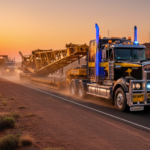
Australia’s mining sector depends heavily on the safe and efficient movement of oversized and overmass equipment across vast distances. From remote mine sites in Western Australia to large-scale projects in Queensland and New South Wales, heavy haulage mining transport plays a critical role in keeping operations running on schedule. When it comes to complex mining transport requirements, understanding how oversized equipment is planned, approved, and delivered is essential for mine operators, EPC contractors, and project managers alike.
In this guide, we’ll break down how heavy haulage mining transport works in Australia, the processes involved, and why choosing an experienced transport partner makes a measurable difference to safety, compliance, and project timelines.
What Is Heavy Haulage Mining Transport?
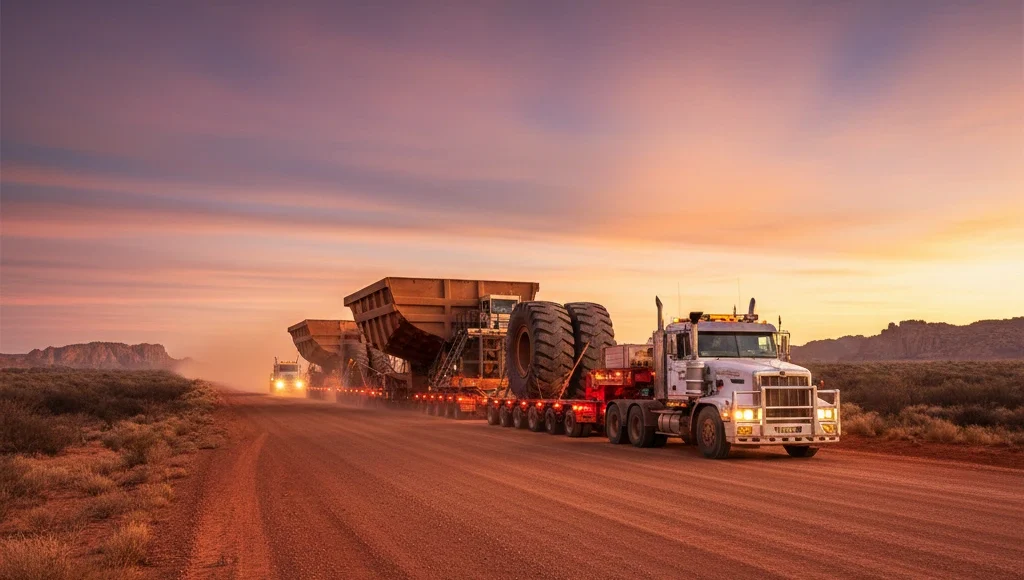
Heavy haulage mining transport refers to the specialised movement of oversized, over-dimensional, or overmass mining equipment that cannot be transported using standard freight methods. This includes machinery such as excavators, haul trucks, crushers, draglines, conveyors, and modular mining components.
Unlike general freight, heavy haulage mining transport requires purpose-built trailers, detailed route planning, permits, and strict compliance with Australian transport regulations. As a result, mining transport projects are typically managed end to end by specialist operators with proven experience in the mining and resources sector.
Types of Oversized Equipment Moved in Mining Projects
Oversized equipment used in mining operations varies depending on the commodity and project scale. Common examples include:
-
Large excavators and hydraulic shovels
-
Bulldozers and graders
-
Haul trucks and dump bodies
-
Crushers, screens, and processing modules
-
Long structural steel and mining infrastructure components
Each of these assets presents unique challenges in heavy haulage mining transport, particularly when travelling through remote regions, tight access roads, or public highways.
How Heavy Haulage Mining Transport Works in Australia?
1. Project Assessment and Load Analysis
The process begins with a detailed assessment of the load. Dimensions, weight, centre of gravity, and handling requirements are all evaluated. This step is crucial, as it determines the correct trailer configuration, axle spacing, and escort requirements for the mining transport task.
Experienced heavy haulage providers also assess site access points, loading conditions, and unloading constraints to avoid delays later in the project.
2. Route Planning and Feasibility Studies
Route planning is one of the most critical stages in heavy haulage mining transport. Australian roads vary significantly in terms of load limits, bridge capacities, gradients, and turning radii.
Transport specialists conduct route surveys to identify:
-
Bridge and pavement load restrictions
-
Overhead obstructions such as powerlines and signage
-
Tight turns, roundabouts, and access roads
-
Suitable rest and staging areas
Effective route planning reduces risk, ensures compliance, and keeps mining transport projects on schedule.
3. Permits, Escorts, and Regulatory Compliance
Oversized mining transport in Australia requires permits from state and territory road authorities. These permits specify approved routes, travel times, speed limits, and escort requirements.
Depending on the load and location, heavy haulage mining transport may require:
-
Pilot vehicles or escort vehicles
-
Police escorts in specific jurisdictions
-
Travel during restricted hours or night movements
Managing permits efficiently is a key indicator of an experienced mining transport provider.
4. Specialised Equipment and Fleet Selection
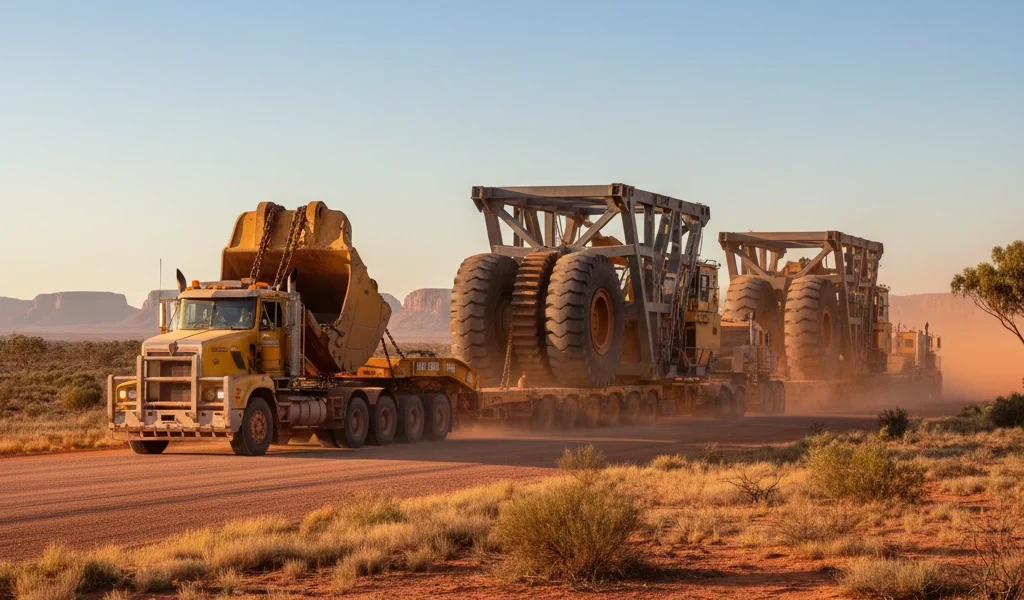
Transporting oversized mining equipment demands specialised trailers such as:
-
Low loaders and drop-deck trailers
-
Modular platform trailers
-
Extendable trailers for long loads
The correct fleet selection ensures stability, compliance, and safety throughout the journey. In heavy haulage mining transport, the right equipment can significantly reduce risk and improve efficiency.
5. Safety Management and Risk Control
Safety is non-negotiable in mining transport operations. Detailed risk assessments, traffic management plans, and method statements are prepared before mobilisation.
Key safety measures include:
-
Load restraint systems designed for oversized equipment
-
Real-time communication between drivers and escorts
-
Weather monitoring and contingency planning
By prioritising safety, heavy haulage mining transport providers protect personnel, infrastructure, and high-value mining assets.
6. Delivery, Offloading, and Site Coordination
Once on site, coordination with mine operators is essential. Offloading oversized equipment often requires cranes, jacking systems, or specialised unloading zones.
An experienced mining transport team ensures that delivery aligns with construction schedules, shutdown windows, or commissioning timelines, minimising downtime and disruption.
Why Experience Matters in Heavy Haulage Mining Transport?
Mining projects operate under tight schedules and strict compliance frameworks. Any delay or incident during transport can have a ripple effect across the entire operation.
Working with a proven heavy haulage mining transport specialist delivers:
-
Reduced project risk
-
Faster approvals and smoother logistics
-
Improved safety outcomes
-
Reliable delivery timelines
In Australia’s demanding mining environment, experience is not optional—it’s essential.
Common Challenges in Australian Mining Transport
Even with careful planning, mining transport projects face challenges such as:
-
Remote and unsealed access roads
-
Extreme weather conditions
-
Infrastructure limitations in regional areas
-
Changing regulatory requirements across states
Professional heavy haulage operators are equipped to manage these challenges proactively, ensuring oversized equipment reaches site safely and efficiently.
Choosing the Right Heavy Haulage Partner
When selecting a provider for mining transport, look for:
-
Demonstrated experience in heavy haulage mining transport
-
A modern, specialised fleet
-
Strong safety systems and compliance processes
-
Proven capability across Australian mining regions
A trusted partner adds value beyond transport by supporting overall project success.
Conclusion
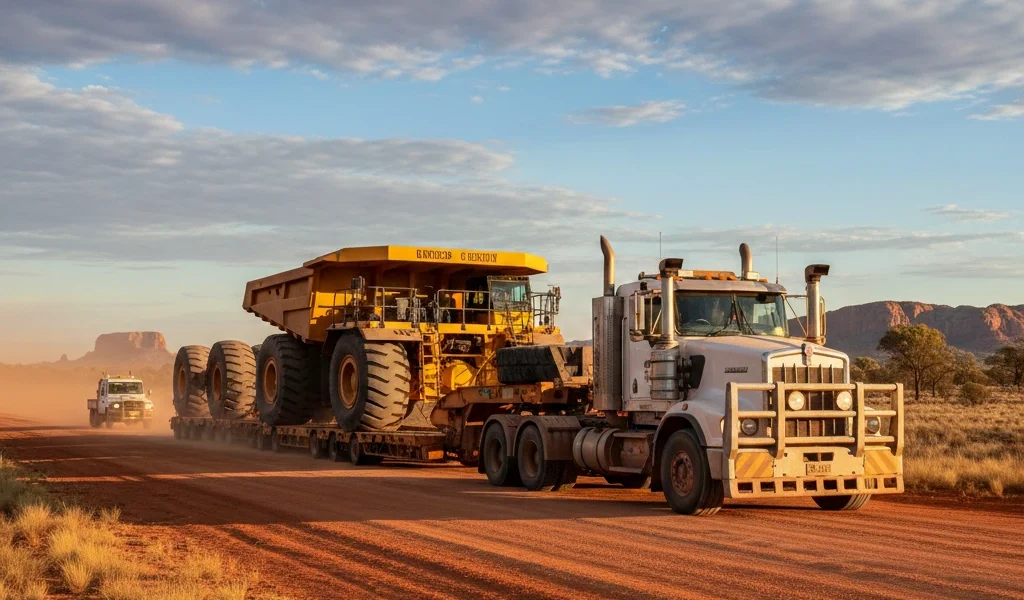
Oversized equipment movement is a critical component of successful mining operations across Australia. From planning and permits to execution and delivery, heavy haulage mining transport requires precision, expertise, and a deep understanding of Australian mining logistics. With the right approach and an experienced provider, mining transport projects can be delivered safely, compliantly, and on time—supporting productivity across the resources sector.
If you’re planning a mining project and need reliable support for oversized equipment movement, Turner Heavy Haulage provides professional heavy haulage mining transport solutions across Australia. Our experienced team specialises in complex mining transport projects, from route planning and permits to safe delivery at remote mine sites. Contact us today to discuss your requirements and request a tailored transport solution for your next mining project.