Mining Logistics Transport in Australia: Costs, Challenges & Heavy Haulage Solutions
Mining projects across Australia depend heavily on Mining Transport systems that are reliable, compliant, and capable of handling extreme loads over long distances. From moving oversized machinery to delivering essential equipment to remote mine sites, Mining Logistics Transport plays a critical role in keeping mining operations productive and safe. As the mining sector continues to expand across regional and remote Australia, the demand for professional heavy haulage solutions has never been higher.
This guide explains how Mining Logistics Transport works in Australia, what it costs, the challenges involved, and how specialised heavy haulage companies deliver safe, compliant, and efficient outcomes for mining projects of all sizes.
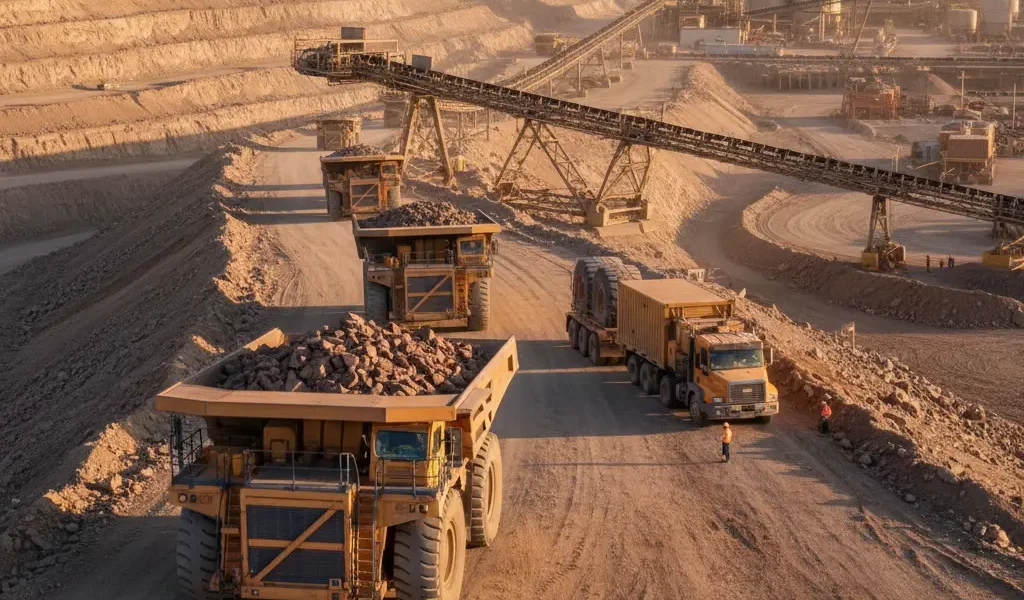
What Is Mining Logistics Transport in Australia?
Mining Logistics Transport refers to the planning, coordination, and execution of transporting mining equipment, machinery, materials, and infrastructure components between ports, depots, and mine sites. Unlike standard freight services, mining logistics requires a deep understanding of load dimensions, weight limits, route planning, and strict safety regulations.
In Australia, Mining Transport often involves moving:
-
Excavators, dozers, graders, and haul trucks
-
Crushers, conveyors, and processing plant components
-
Modular buildings and site infrastructure
-
Oversize, over-mass, and abnormal loads
Because mine sites are frequently located in remote or regional areas, professional mining logistics providers must combine heavy haulage expertise with advanced planning and risk management.
How Mining Transport Supports Remote Mine Sites
One of the biggest challenges in Mining Logistics Transport is servicing remote mine locations. Many Australian mining operations are hundreds of kilometres from major cities, requiring transport through regional highways, rural roads, and unsealed access tracks.
Professional mining logistics providers support remote operations by:
-
Conducting detailed route assessments and surveys
-
Managing bridge, road, and axle load restrictions
-
Coordinating pilot vehicles and traffic management
-
Planning staged deliveries to reduce site disruption
As a result, well-managed Mining Transport ensures that critical equipment arrives on time, minimising costly downtime and keeping projects on schedule.
Mining Logistics Transport Costs in Australia
The cost of Mining Logistics Transport in Australia varies depending on several key factors. Unlike general freight, mining logistics pricing is project-specific due to the complexity involved.
Key Cost Factors in Mining Logistics Transport
-
Load size and weight: Oversize and over-mass loads increase permit, escort, and equipment costs
-
Distance and route complexity: Remote locations and restricted roads require more planning
-
Type of transport equipment: Low loaders, extendable trailers, and modular platforms impact pricing
-
Permits and compliance: Regulatory approvals add time and cost
-
Escort and traffic control requirements: Pilot vehicles and police escorts may be mandatory
While costs can be higher than standard transport, professional Mining Transport solutions reduce risk, prevent damage, and avoid costly delays—making them a smart long-term investment.
Major Challenges in Mining Logistics Transport
Transporting mining equipment across Australia presents unique logistical and operational challenges. Understanding these risks is essential for safe and compliant project delivery.
Regulatory and Compliance Challenges
Australian mining logistics must comply with state and national transport regulations, including:
-
Heavy Vehicle National Law (HVNL)
-
Oversize and over-mass permit requirements
-
Workplace health and safety obligations
Failure to meet compliance standards can result in fines, delays, or shutdowns.
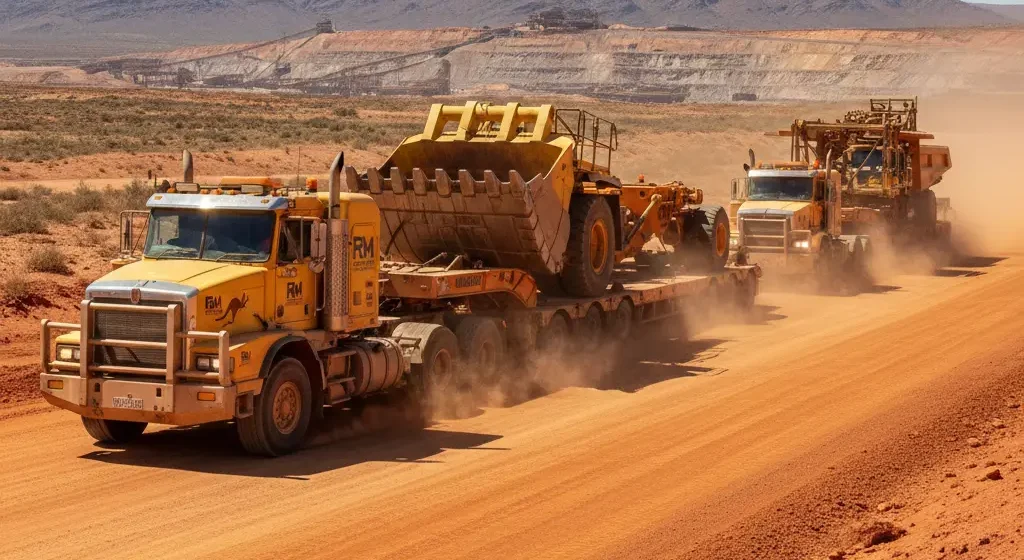
Infrastructure and Route Limitations
Many mining routes include:
-
Narrow regional roads
-
Weight-restricted bridges
-
Unsealed or weather-affected access roads
Effective Mining Logistics Transport depends on accurate route planning and contingency strategies.
Weather and Environmental Conditions
Extreme heat, flooding, and seasonal road closures can disrupt Mining Transport, especially in mining regions across NSW, QLD, and WA. Experienced logistics providers plan around weather risks to maintain reliability.
Heavy Haulage Solutions for Mining Logistics
Heavy haulage is at the core of effective Mining Logistics Transport. Specialised equipment and trained operators are essential for handling large-scale mining loads safely.
Specialised Heavy Haulage Equipment
Mining logistics providers utilise:
-
Low loaders and drop-deck trailers
-
Extendable and multi-axle platforms
-
Modular trailers for abnormal loads
This equipment allows safe movement of oversized machinery while distributing weight correctly across road networks.
End-to-End Project Management
Professional Mining Transport services include:
-
Load assessments and engineering support
-
Permit acquisition and regulatory liaison
-
Escort coordination and route management
-
Site delivery scheduling and unloading support
This end-to-end approach reduces risk and improves efficiency across mining projects.
Safety and Risk Management in Mining Transport
Safety is non-negotiable in Mining Logistics Transport. Heavy haulage providers follow strict procedures to protect drivers, road users, and mining assets.
Key safety measures include:
-
Comprehensive risk assessments
-
Experienced heavy haulage drivers
-
Secure load restraint systems
-
Continuous monitoring during transit
By prioritising safety, mining logistics providers help maintain compliance and protect project timelines.
Choosing the Right Mining Logistics Transport Partner
Selecting the right provider is critical for successful Mining Transport outcomes. Mining companies should look for partners with:
-
Proven experience in mining and heavy haulage
-
Strong compliance and safety records
-
Capability to service remote locations
-
Transparent communication and planning processes
An experienced mining logistics partner not only transports equipment but also acts as a strategic extension of the mining project team.
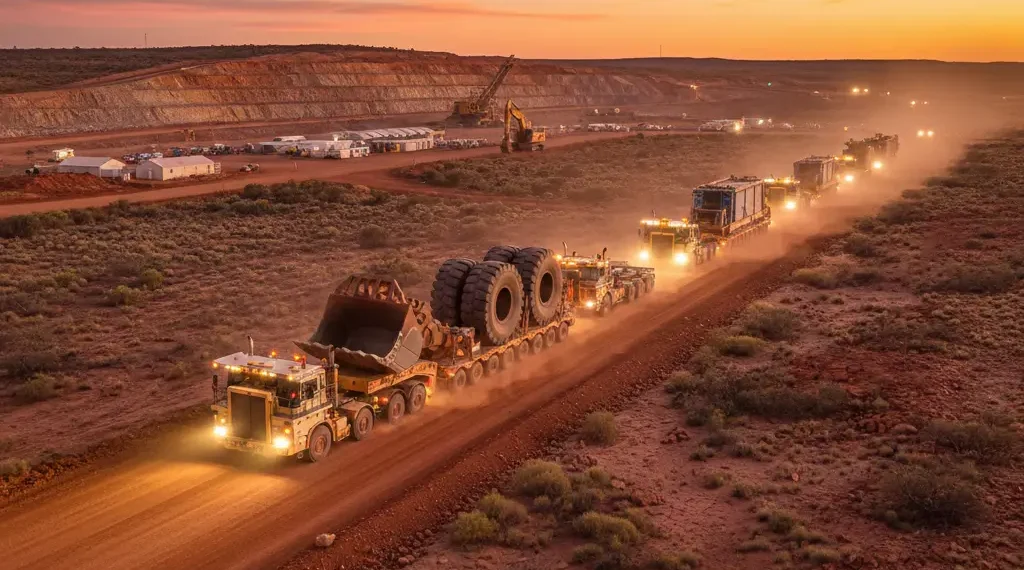
Why Professional Mining Logistics Transport Matters
Reliable Mining Logistics Transport ensures that mining projects operate efficiently, safely, and within budget. Poor planning or inexperienced transport providers can lead to equipment damage, compliance breaches, and costly delays. By working with a professional heavy haulage company, mining operators gain peace of mind knowing their Mining Transport requirements are managed by experts who understand the complexity of Australian mining logistics.
If you’re looking for dependable Mining Logistics Transport and Mining Transport solutions across Australia, Turner Heavy Haulage is here to help. With proven experience in heavy haulage and mining logistics, we deliver safe, compliant, and efficient transport solutions tailored to your project needs. Contact Turner Heavy Haulage today to discuss your mining logistics requirements and discover how our heavy haulage expertise can support your next mining project with confidence.
Share This Post
Comments
Recent Posts


REQUEST FOR QUOTE
To get a free quote for the heavy haulage transport in New South Wales, fill up the form. We are happy to contact you soon.